
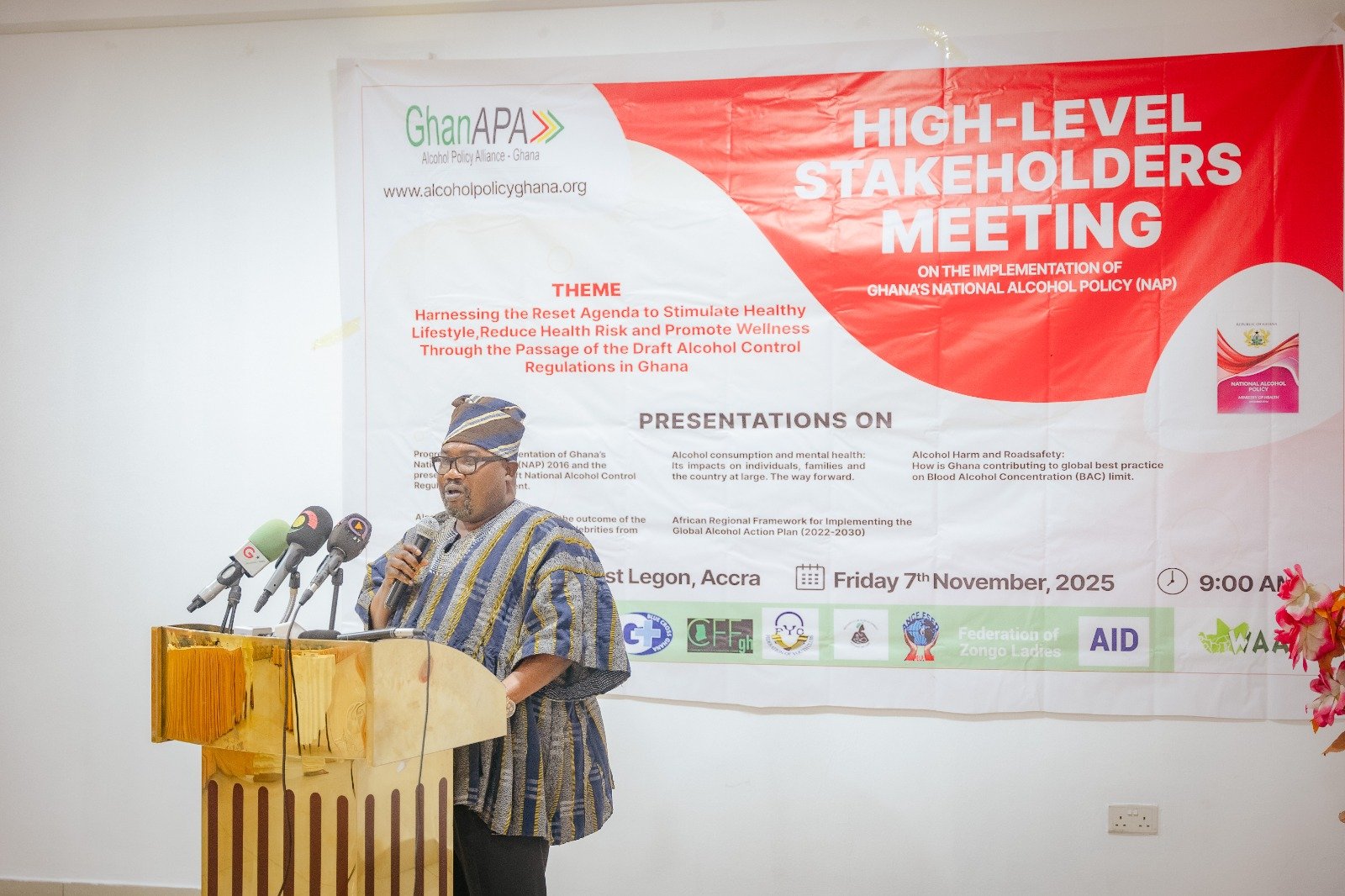
The Alcohol Policy Alliance-Ghana (GhanAPA) successfully held a High-Level Stakeholders Meeting on 7th November 2025 at the Mensvic Hotel, East Legon, under the theme:
“Harnessing the Reset Agenda to stimulate healthy lifestyles and promote wellness through the passage of the draft National Alcohol Control Regulations.
The meeting was chaired by Hon. Mark Kurt Nawane, Chairman of the Parliamentary Select Committee on Health and MP for Nabdam. In his opening remarks, he emphasized Parliament’s dedication to protecting public health. He expressed confidence that once the draft Alcohol Control Regulations are submitted, the Health Committee and the Subsidiary Legislation Committee will act swiftly to facilitate their passage.
Mr. Benjamin Anabila, Chairman of GhanAPA, welcomed participants and called for strengthened collaboration to reduce alcohol-related harm. He stressed the urgent need for Ghana to advance the draft regulations to ensure a comprehensive alcohol control framework.
Stakeholders including the Food and Drugs Authority (FDA), Ghana Health Service (GHS), Ministry of Health (MoH), National Road Safety Authority (NRSA), Ghana Education Service (GES), Ghana Revenue Authority (GRA), the World Health Organization (WHO), the West African Alcohol Policy Alliance (WAAPA), and civil society organizations delivered messages reaffirming their commitment to supporting the implementation of the National Alcohol Policy, improving regulatory enforcement, strengthening public education, and advocating for the passage of the draft Alcohol Control Regulations.
In closing the first session, Hon. Nawane reiterated Parliament’s commitment to collaborating with stakeholders and gave his assurance that the committee will not hesitate to advance the regulations once they are formally laid before Parliament.

“As we speak now, the bill has been passed into law, but I think the L.I. or the regulations are with the Ministry of Health, and it is supposed to go to Cabinet before it comes back to Parliament. “So, as your parliamentarian and the chairman of the health committee, I can assure you that once it goes through the process, that is through the Executive Arm of government and comes back to parliament. “We will ensure that the health committee with the Subsidiary Legislation Committee will sit down and, within the shortest possible time, pass it into regulation for the country,” Dr Nawane Added.
The second session featured technical presentations from stakeholders on the state of alcohol control in Ghana and the way forward.
The Mental Health Authority delivered an insightful presentation on the relationship between alcohol consumption and mental health, highlighting its severe impacts on individuals, families, and the country at large. The presentation emphasized the rising burden of alcohol-related mental health conditions and the urgent need for strengthened prevention, early intervention, and public awareness strategies. Recommendations for the way forward included integrated mental health services and multi-sectoral collaboration.
The NRSA presented on Alcohol Harm and Road Safety, emphasizing Ghana’s progress and challenges in aligning with global best practices on Blood Alcohol Concentration (BAC) limits. The presentation underscored the role of effective enforcement, data systems, and legislative support in reducing alcohol-related road crashes.
Representatives from the legal department of the Food and Drugs Authority (FDA) provided an update on current alcohol regulations in Ghana, focusing on the Supreme Court ruling upholding the ban on celebrities endorsing alcoholic beverages. The presentation highlighted the public health justification for this restriction and reaffirmed FDA’s commitment to enforcing laws that reduce exposure of minors and vulnerable populations to harmful alcohol marketing.
The West African Alcohol Policy Alliance (WAAPA) delivered a presentation on the African Regional Framework for implementing the Global Alcohol Action Plan (2022–2030), highlighting the importance of regional cooperation, harmonized policies, and evidence-based action across ECOWAS countries to reduce alcohol harm and achieve global targets.
The Ministry of Health (MoH) gave a presentation on the progress of implementing Ghana’s National Alcohol Policy (NAP) and the processes underway for the presentation of the draft Alcohol Control Regulations to Parliament. The Ministry reaffirmed its commitment to working with all stakeholders to expedite the legislative process.
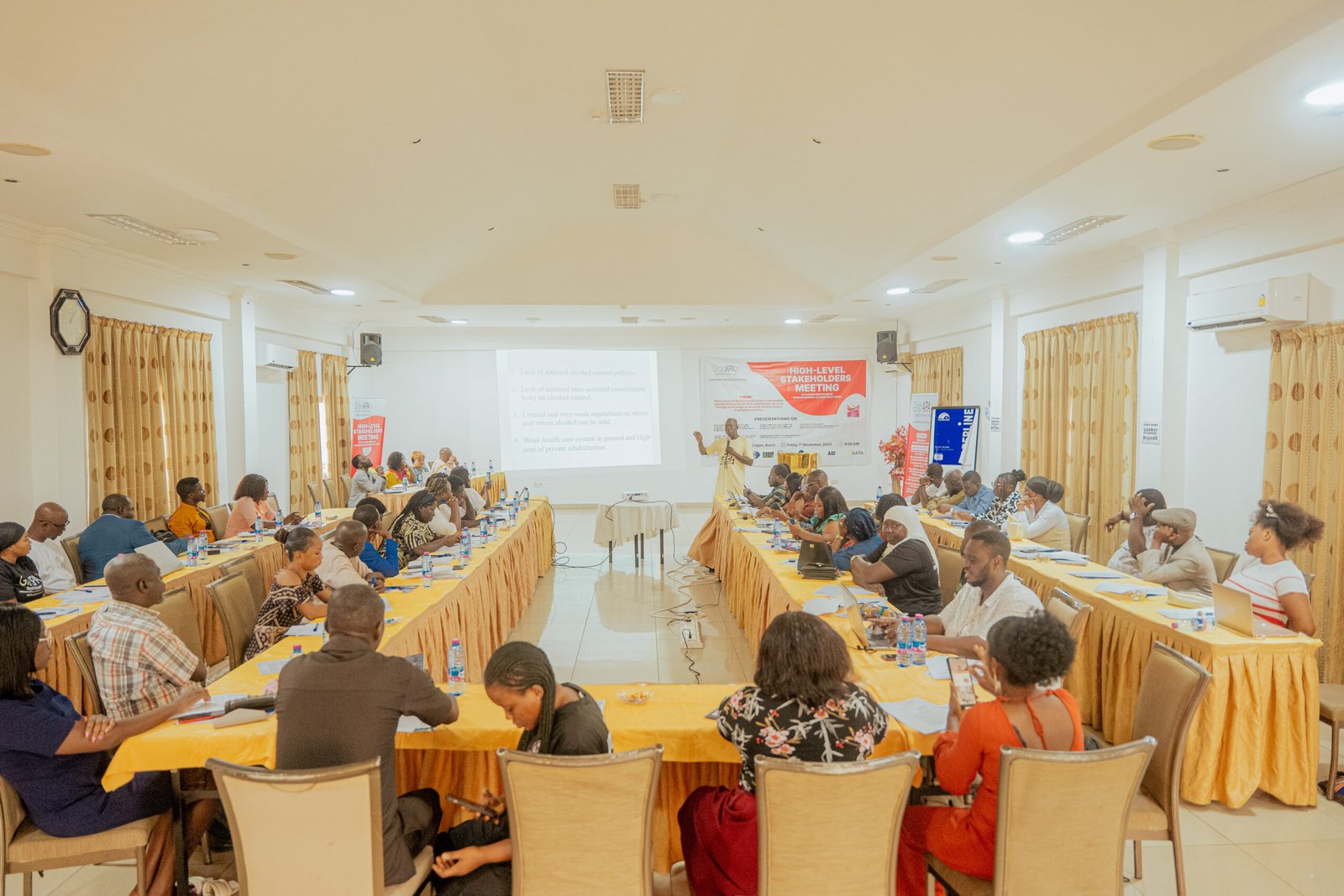

At the concluding part of the meeting, there was a panel discussion on the passage and implementation of the draft National Alcohol Control Regulations where panelists emphasized the need for political will, robust enforcement structures, sustained advocacy, and adequate resource allocation to ensure effective implementation once the regulations are passed. Stakeholders collectively reaffirmed their readiness to support government efforts in advancing alcohol control for the benefit of all Ghanaian.
The meeting ended with participants of the High-Level Meeting declaring the following recommendations:
- Request Stakeholders and Duty Bearers to priorities the comprehensive implementation of the
National Alcohol Policy 2016 through a coordinated multi-sectoral actions.
- Call on Government (Ministry of Health and Parliament) to ensure the presentation and passage
of the draft National Alcohol Control Regulation into law.
- Urge Government to protect public health policies and the National Alcohol Policy from
commercial and vested interest.
- Recommend to the Ministry of Health (MoH), Ministry of Finance (MoF) and Parliament to
allocate adequate and sustainable financing for the implementation of the National Alcohol Policy
2016 and Section 173 (3)(f) of Public Health Act 2012.
- Call on Parliament to expedite actions on the Passage of the Amended Road Traffic Act.
- National Road Safety Authority should be adequately funded.
- Tax Revenue Generated from Alcoholic beverage should be used for the prevention of Alcohol
related Diseases
- Rehabilitation centers to be set up and funded.