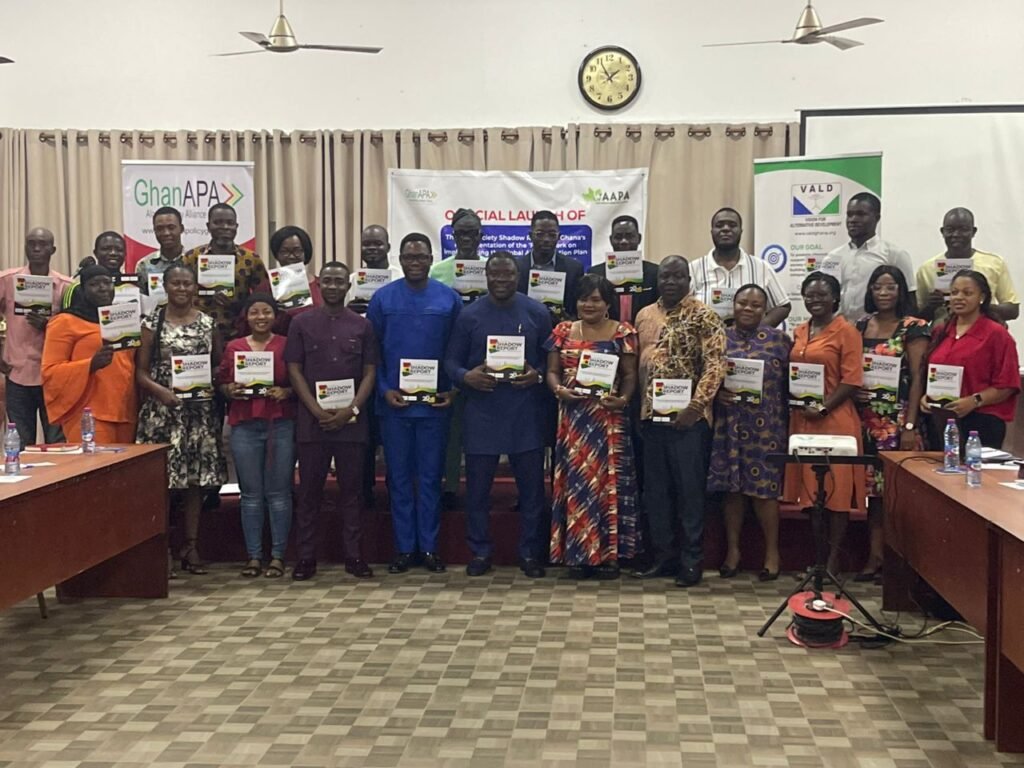
On the 29th January, 2026, at the CSIR, STEPRI, Dr. Frempong Hall in Accra, the Alcohol
Policy Alliance-Ghana (GhanAPA) launched a Civil Society Shadow Reporton the Implementation of the African Region Framework on the Global Alcohol Action Plan 20222030.
The object of the Launch was to call on government attention on the passage of the Draft National Alcohol Regulations through the launch of the Civil Society Shadow report that highlights Ghana’s progress and gaps in implementing the African Regional Framework on the Global Alcohol Action Plan 2022-2030. The event saw the attendance of representatives from Ministry of Health, Food and Drugs Authority, Mental Health Authority, Ghana Health Service, National Road Safety Authority, Civil Society Organization and friends from the media.
Hon. Yussif Issaka Jajah, the Deputy Minister for Tourism, Culture and Creative Arts and the Member of Parliament for Ayawaso North constituency was the Chairman for the event. In his speech during the Launch of the report, he reinforced the call for urgent government action, stressing the role of both government and media in protecting public health. He stated that Government must pass the alcohol control legislative instrument, regulate aggressive marketing, especially to the youth, and enforce mandatory health warnings. He also noted that the harmful use of alcohol has become one of the most pressing public health and social challenges facing the country. Citing studies by the World Health Organization, he explained that alcohol is linked to non-communicable diseases, including liver disease, cardiovascular conditions, and strokes, while also driving risky behaviors among young people. To conclude his speech, he stated that “Beyond the health implications, alcohol abuse contributes significantly to road traffic accidents, domestic and community violence, and reduces productivity which in turn places enormous pressure on families, communities, and national institutions, while also imposing a costly economic burden on the country.
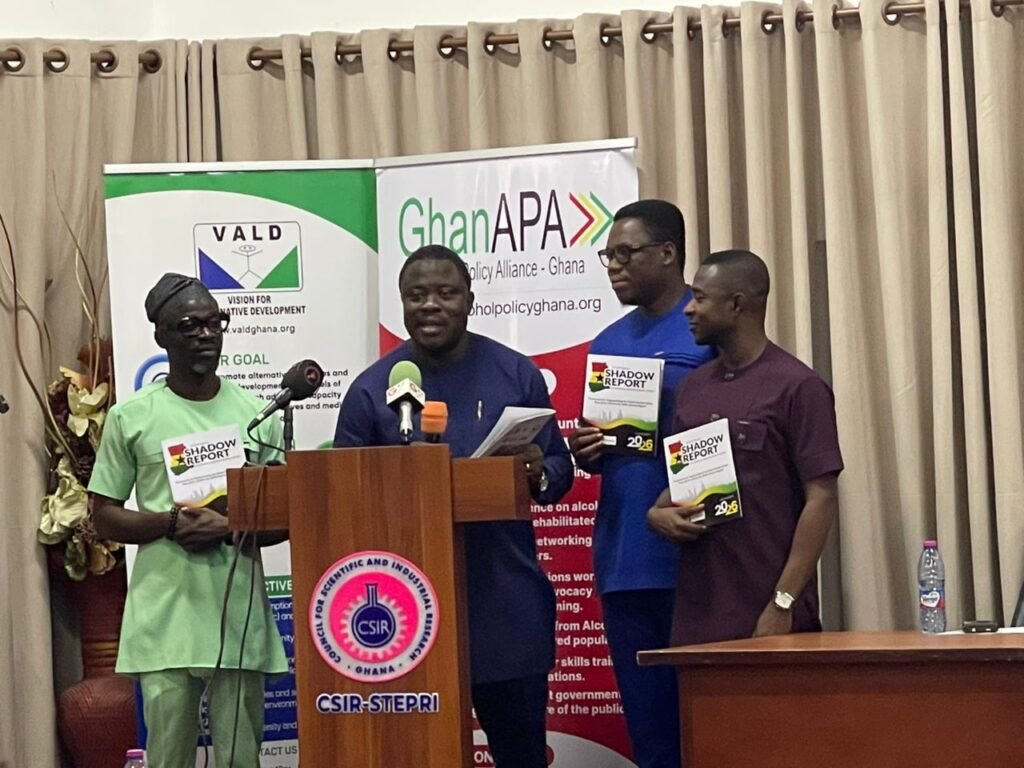
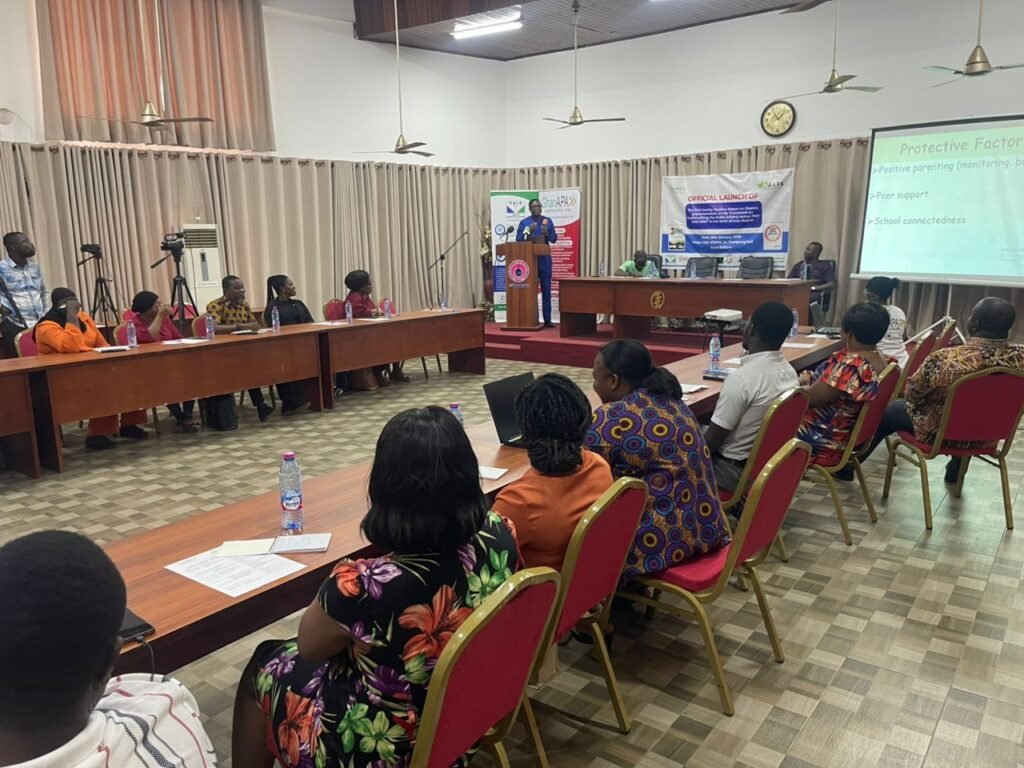
Professor Nuworza Kugbey, from the University of Environment and Sustainable Development (UESD), Somanya, in his presentation mentioned that about 13 percent of Ghanaian youth are consuming alcohol excessively, which is destroying their future. He continued to mention that alcohol use remains a major public health concern among adolescents linked to poor academic outcomes, violence, injuries, and mental health problems. He added that adolescent alcohol use is a growing social menace which needs to be addressed with all seriousness. He recommended Multi sectorial action, high-risk adolescents targets, Scale up evidence-based school interventions. He concluded his presentation by calling on government to make collective action to protect the youth and adolescent by passing the Alcohol Control Regulations into law.
Mr. Luqman Usman, the Consultant who developed the Shadow Report for Ghana, in his presentation stressed that while Ghana has a National Alcohol Policy (2016), its implementation has been weak, leaving gaps in regulation, monitoring, and enforcement. He continued to mention that despite having a policy in place in Ghana, critical structures like a National Alcohol Commission have not been established, leadership is fragmented, and enforcement agencies remain underfunded and under-resourced. Mr. Usman further emphasized the need for multisectorial coordination, noting that agencies such as the Ministry of Health, Food and Drugs Authority, and Mental Health Authority must collaborate effectively to implement the policy.
Mr. Issah Ali, Chairman of West African Alcohol Policy Alliance (WAAPA), emphasized that civil society will continue to monitor implementation and hold duty bearers accountable. He urged policymakers, development partners, and community groups to use the Shadow Report as a tool for advocacy and legislative action. He continued to mention that the report is a tool for action not just to expose gaps, but to provide evidence for government, civil society, and development partners to drive meaningful policy and legislative implementation. He called on the Minister of Health to take this opportunity to highlight Ghana’s achievements and outline the steps needed to protect the population from alcohol harm.
Mr. Mark Atuahene, a representative of the Ministry of Health emphasized that the journey of alcohol control policy has really been a very tough game that may seem like the MOH has delayed in the implementation of certain aspects of the policy like the enactment of the Alcohol Legislative Instrument but the MOH is working to get the Legislative Instrument into a comprehensive document that can stand the test of time. He called on the Ministry of tourism to ensure that hotels, pubs, bars ensure that before alcohol is sold to anyone, ID cards should be shown to show that they are not underage. He urged the Local Government to enact the provisions of the local government Acts on alcohol sale and licensing to ensure that local bars in communities adhere to the laws. He also called on the media to also not focus on making profit alone but focus on the broader goal of having a healthy population by using their platforms to educate against consumption of alcohol and unhealthy diets as a whole. He concluded his statement by saying this the alcohol control fight is not a fight for just the MOH but should be an inter sectorial fight that all agencies come together in the implementation of the Alcohol Control Regulation.
Other stakeholders present including the Mental Health Authority, National Road Safety Authority and the Ghana Health Service all emphasized the negative effects of alcohol consumption and the need for the urgent passage of the National Alcohol Control Regulations to protect the public from alcohol harm. They also emphasized that when the National Alcohol Control Regulation is passed into law, stakeholders must come together to collectively implement and enforce the law.
RECOMMENDATIONS ADOPTED AT THE LAUNCH
- Parliament, Ministry of Health and the Food and Drugs Authority should prioritize the passage of the Draft Alcohol Control Regulations to give the National Alcohol Policy (NAP) a legal backing.
- The Ministry of Health should ensure sustained funding for multi-sectoral coordination, while protecting the process from alcohol industry influence.
- Adopt comprehensive restrictions on alcohol advertising, promotion, and sponsorship across all media, particularly those targeting minors and youth audiences.
- Government should strengthen enforcement of existing laws to curb illicit alcohol trade, particularly by empowering the FDA to extend surveillance to rural and border areas
- A coordinated national monitoring framework should be developed, with clear indicators and annual reporting on alcohol-related harms.
- Lower the legal Blood Alcohol Concentration (BAC) limit within 0.02% – 0.05% (or adopt an evidence-based alternative) and reinforce enforcement with routine roadside testing and sanctions.
- Introduce mandatory registration and licensing for all local alcohol producers, with incentives for compliance such as access to quality testing and certification services.
- Introduce mandatory graphic health warnings on alcohol packaging and advertisements, in line with global public health standards.
- Enhance border control operations and cross-agency collaboration between GRA, Customs, and the Police Service to detect and confiscate unregistered alcoholic imports.
- Public education and social marketing campaigns should be scaled up to build awareness of the health and social risks of alcohol consumption.